
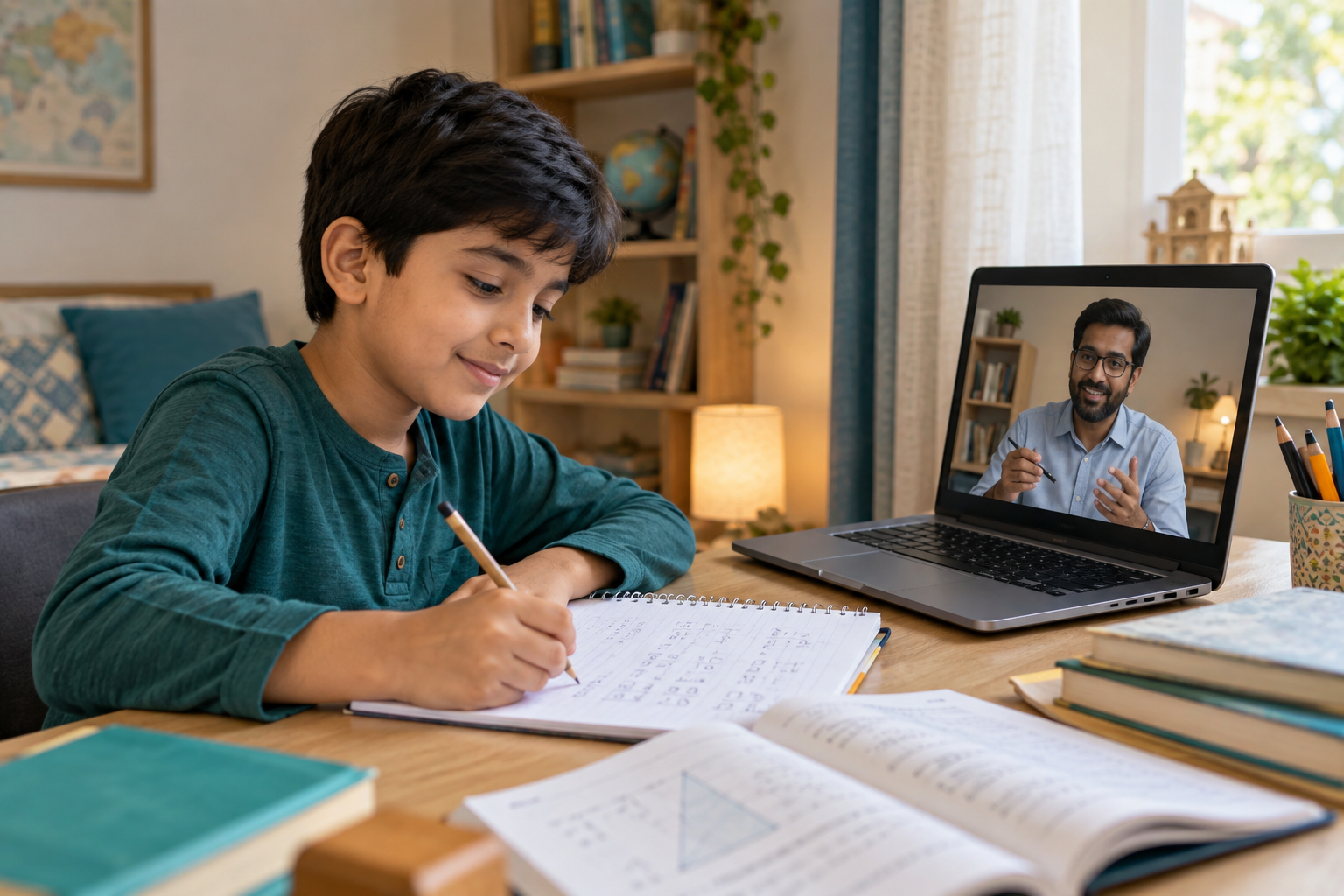
Illustration of an individual teacher supporting a child learning from home

Homeschooling vs Virtual School in Pakistan: What Parents Should Know

Illustration of an individual teacher supporting a child learning from home
Illustration: families can combine home learning with teacher support.

Homeschooling and virtual school both happen at home, but the family’s role can be very different. Before choosing either, ask who plans lessons, who teaches each day and how your child’s progress will be assessed.

What is homeschooling?

In homeschooling, parents or caregivers usually take the lead in choosing resources, organising the day and supporting learning. A family may invite a tutor or join an online class for particular subjects. The flexibility can be valuable, but it also requires planning and time from an adult.

What is a virtual school?

A virtual-school program generally provides a more structured timetable with teacher-led lessons, assignments and feedback online. Details vary widely. Some programs cover only selected subjects; others aim for a fuller school-day experience. Ask specifically whether a provider offers formal registration, examinations or certification if those matter for your child’s future pathway.

Compare the everyday experience

QuestionHomeschoolingVirtual school
Who plans the day?Often the familyUsually the program with family support
Who teaches?Parent, tutors or a mixLive teachers for scheduled classes
FlexibilityUsually highDepends on timetable
Parent timeOften substantialStill important, especially for young children

Which is better for a primary child?

There is no universal answer. A child who thrives on conversation with peers may benefit from a consistent live class. A family travelling frequently may prefer a flexible plan with one-to-one teacher support. For preschoolers, short sessions and abundant offline play matter in either approach. Ask to see a sample week, meet a teacher and review the actual subject outline before deciding.

How Threex Academy supports both routes

Our virtual-school page explains live class options. Homeschooling support can give families guidance while keeping their routine flexible, and one-to-one lessons can address a particular learning gap. Tell us your child’s age and goals; we’ll explain current availability, timings, books, assessment and fees.
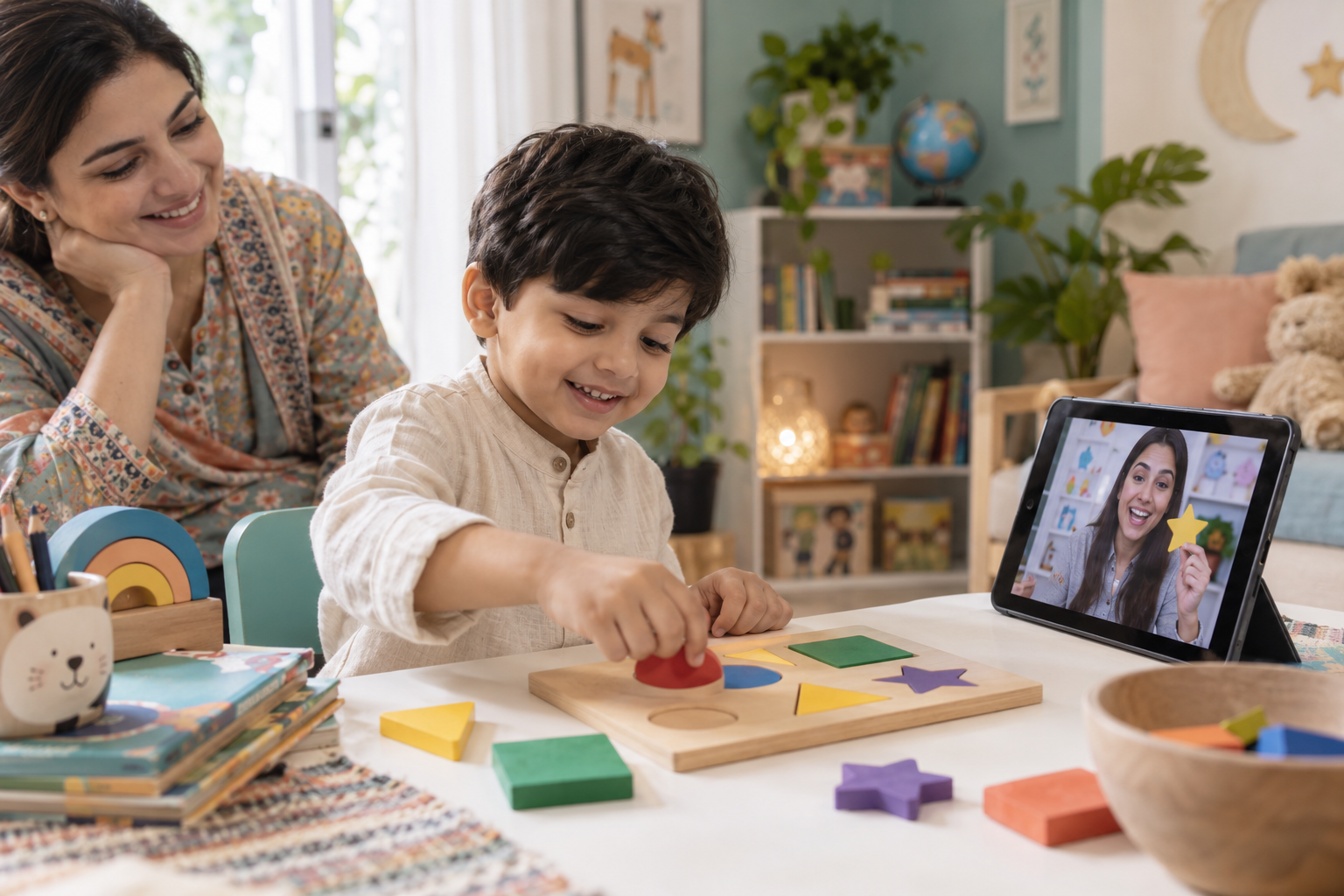
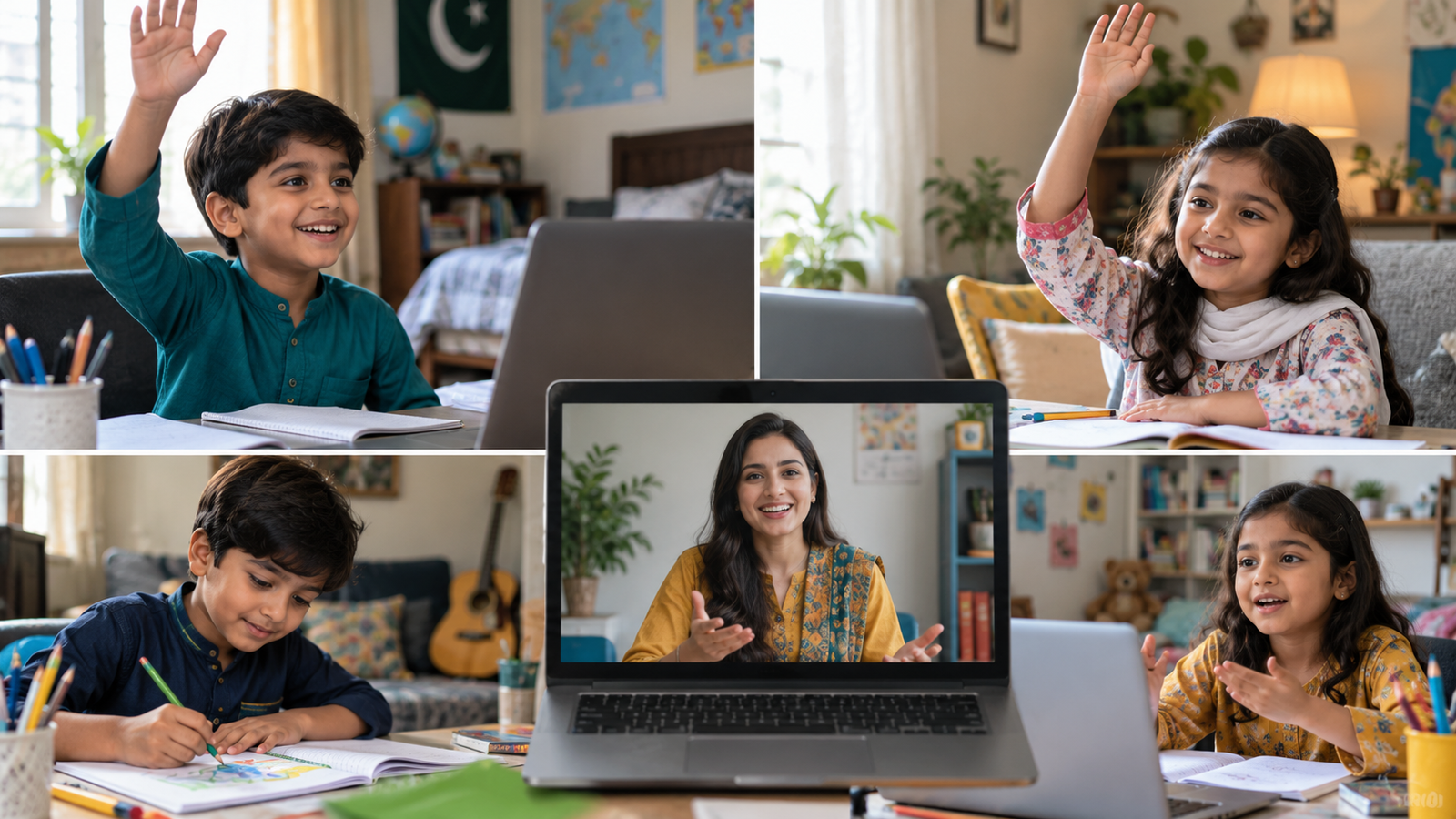
Illustration of a preschool child using colorful shapes during guided learning

Online Preschool for 3-Year-Olds: Play, Screens and Parent Support

Illustration of a preschool child using colorful shapes during guided learning
Illustration: early learning should include play and hands-on discovery.

Can a three-year-old learn online? Yes, with the right expectations: short human interaction, a familiar adult nearby, and much more time playing and exploring away from the screen. A preschool program should never be a full day of passive video watching.

Start with the child, not the device

At age three, children learn through movement, conversation, stories, songs and handling real objects. A live teacher can introduce a sound, a counting game or a story, then invite the child to try it with a parent or caregiver. The best online session becomes a prompt for offline play.

The World Health Organization’s guidance for children aged three to four recommends limiting sedentary screen time to no more than one hour a day, with less being better, while making room for active play and sleep. Families should consider the child’s total daily screen use when choosing a class schedule.

What to ask a preschool provider

  • How long are live sessions, and what happens between them?
  • Will my child talk to the teacher and other children?
  • What household materials or books will we need?
  • How does the teacher adapt if my child is shy or restless?
  • How much support does a parent need to give?
  • Will progress be described through real observations, rather than grades alone?

A gentle sample rhythm

Begin with a greeting and song; spend a brief live period on a story, letter sound or number idea; step away from the device for a movement game; then use blocks, crayons or household objects to practise. Close with reading together. The exact timing should suit your child and the teacher’s plan.

How Threex Academy approaches early years

Our virtual-school pathway is intended to include playgroup and preschool foundations from age three. We discuss readiness, language and family routine before suggesting a class. Ask for current availability, the session length and a sample timetable; contact our team to decide if this is a good fit.

Further reading: WHO guidance on physical activity, sleep and screen time for children under five.

Illustration of a teacher leading a small virtual classroom for children

Virtual School in Pakistan: A Parent’s Guide to Consistent Learning

Illustration of a teacher leading a small virtual classroom for children
Illustration: a teacher-led online classroom.

For many families in Pakistan, a reliable learning routine matters when travel, weather or other disruptions make the school day unpredictable. A virtual school can offer live teaching and structure at home, provided it is designed around the child rather than a screen full of worksheets.

What does a virtual school day look like?

Ask for a sample timetable. Primary pupils need a clear start, manageable live sessions, time to move, reading and hands-on tasks away from the device. Younger children need even more play and adult support. A good class gives each child chances to answer, ask questions and practise; it is more than watching a recorded lecture.

Five questions to ask before enrolling

  1. Who teaches the class? Ask about the teacher’s qualifications, experience and the number of children in each live session.
  2. What is taught? Request the grade-specific subject outline, books, learning goals and assessment approach. If you need a particular examination or certificate, ask how it is provided before paying.
  3. How will you hear about progress? Look for examples of teacher feedback and a regular parent update.
  4. What happens when connectivity fails? Ask how work is shared and how a missed class can be recovered.
  5. How much parent support is expected? A three-year-old and an older primary pupil have very different needs.

Keeping learning going during disruptions

UNICEF Pakistan has documented how flood risks can interrupt children’s access to school and how preparation, learning materials and temporary learning spaces help protect continuity. This does not mean every family should switch permanently to online school. It does show the value of a practical backup plan: keep a reading habit, a small set of offline activities, and a clear way to contact your child’s teacher.

At home, try a simple rhythm: a short teacher check-in, reading together, a maths game using household objects, movement, then independent drawing or writing. If conditions are unsafe, follow local official guidance first; learning can resume when the family is safe.

How Threex Academy can help

We offer teacher-led virtual school, homeschooling support and one-to-one lessons. We begin by asking about your child’s age, level and goals, then explain the available timetable and learning plan. Contact us to request the current curriculum outline, class format and fees.

Further reading: UNICEF Pakistan, “Learning Through It All” (March 2026).