
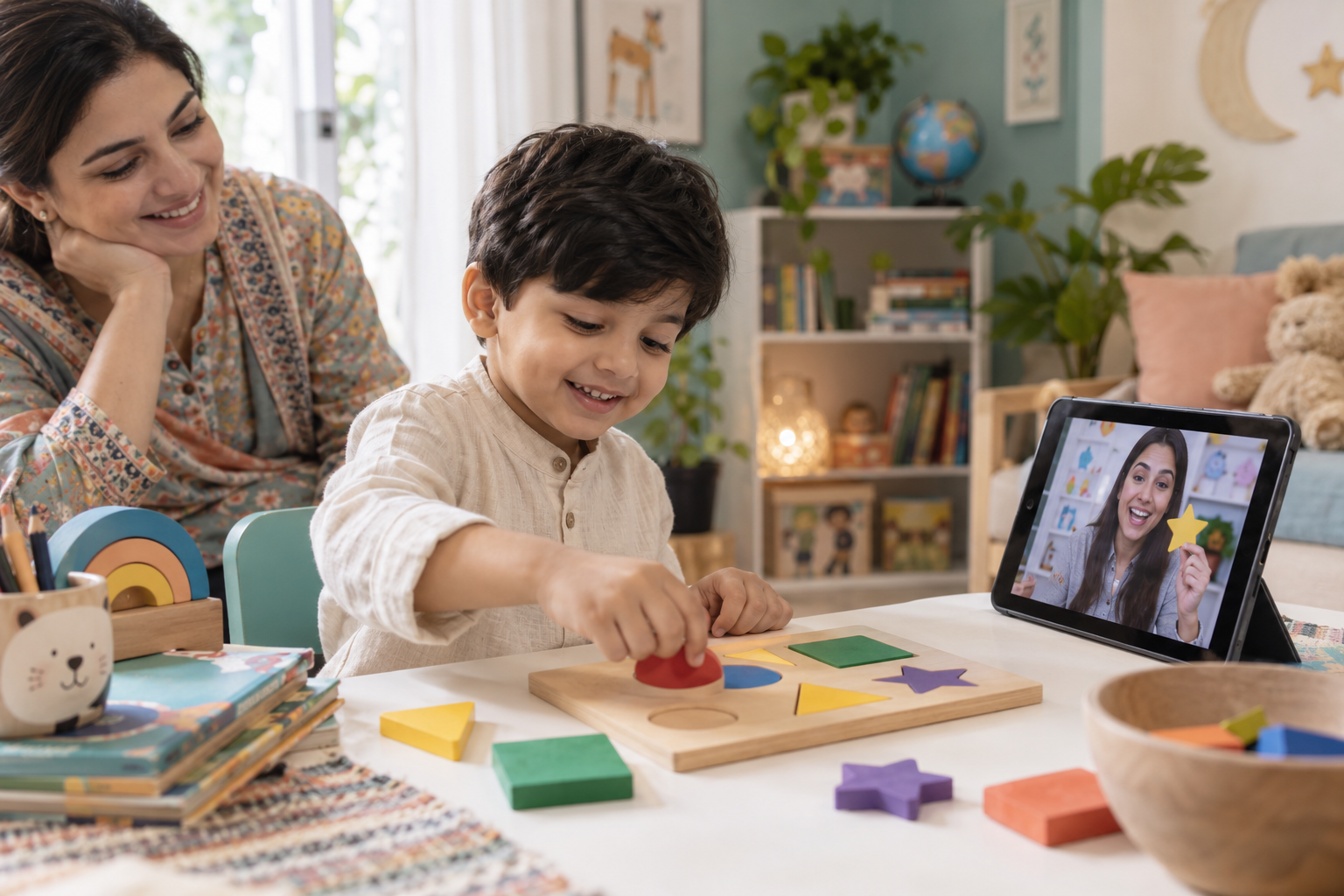
 Illustration: early learning should include play and hands-on discovery.
Can a Three-Year-Old Learn Online? A Parent’s Guide to Early Learning
Can a 3-year-old learn online? Yes, with the right expectations. At this age, online learning should involve short periods of human interaction, a familiar adult nearby, and plenty of time for playing and exploring away from the screen. A preschool program should not be a full day of passive video watching.
For young children, the goal is not to recreate a traditional school day through a screen. Instead, online preschool can provide opportunities for conversation, songs, stories, early literacy, simple number activities and guided play while leaving plenty of time for hands-on discovery.
What to Ask a Preschool Provider
Before choosing an online preschool program, parents should understand how the sessions are designed and what their child’s daily experience will look like.
Consider asking:
-
How long are live sessions, and what happens between them?
-
Will my child talk to the teacher and other children?
-
What household materials or books will we need?
-
How does the teacher adapt if my child is shy or restless?
-
How much support does a parent need to provide?
-
Will progress be described through real observations rather than grades alone?
These questions can help parents understand whether a program is designed around the needs of young children rather than simply delivering lessons through a screen.
Can a 3-Year-Old Learn Online? Start With the Child
When asking can a three-year-old learn online, it is important to consider the individual child rather than focusing only on age.
Some 3-year-olds may enjoy talking to a teacher, joining a song or responding to simple questions. Others may need more time to become comfortable with online interaction. Attention spans can also vary from one child to another.
A supportive preschool program should allow room for movement, play and exploration. Children should not be expected to sit still for long periods or complete activities designed for older students.
Parents can observe how their child responds to sessions and communicate with the teacher about what works well. A flexible approach can help make early online learning more comfortable and meaningful.
A Gentle Sample Rhythm
A simple routine can combine short online interaction with plenty of offline activities.
Begin with a greeting and song. Spend a brief live period on a story, letter sound or number idea. Then step away from the device for a movement game or another active activity. Children can use blocks, crayons, puzzles or household objects to practise what they have explored with the teacher.
The session can close with reading together or another calm activity.
The exact timing should suit the child and the teacher’s plan. The important point is to create a balanced rhythm rather than expecting a three-year-old to spend a large part of the day in front of a screen.
Why Hands-On Play Still Matters
Young children learn through more than formal lessons. Building with blocks, drawing, sorting objects, looking at books, singing songs and playing pretend can all support early development.
Online learning can introduce an idea, but children often need opportunities to explore that idea away from the screen. For example, after learning about shapes, a child could look around the home for objects with different shapes. After a story, they could draw a favourite character or act out part of the story.
This combination of teacher interaction and hands-on discovery can make learning more active and age-appropriate.
Parents may also find it useful to review the WHO guidance on physical activity, sleep and screen time for children under five when planning a balanced routine.
How Threex Academy Approaches Early Years
At Threex Academy, our virtual-school pathway is intended to include playgroup and preschool foundations from age three.
We discuss readiness, language development and family routine before suggesting a class. The aim is to understand what the child needs and how online learning can fit naturally into the family’s day.
PParents wondering can a 3-year-old learn online should consider their child’s attention span, comfort with technology and interest in teacher-led activities. If you would like to discuss your child’s needs, you can contact our team to learn more.
Making Online Preschool Work for Your Child
So, can a 3-year-old learn online? They can take part in meaningful online learning when the experience is designed appropriately for their age and supported by an adult.
When asking can a 3-year-old learn online, parents should look for short, engaging sessions that include interaction, play and hands-on activities.Make space for movement, play, reading and hands-on activities throughout the day. Most importantly, pay attention to your child’s responses and choose a routine that feels manageable for your family.
Online preschool does not need to replace childhood play. With the right approach, teacher interaction can become one small part of a wider early-learning experience.