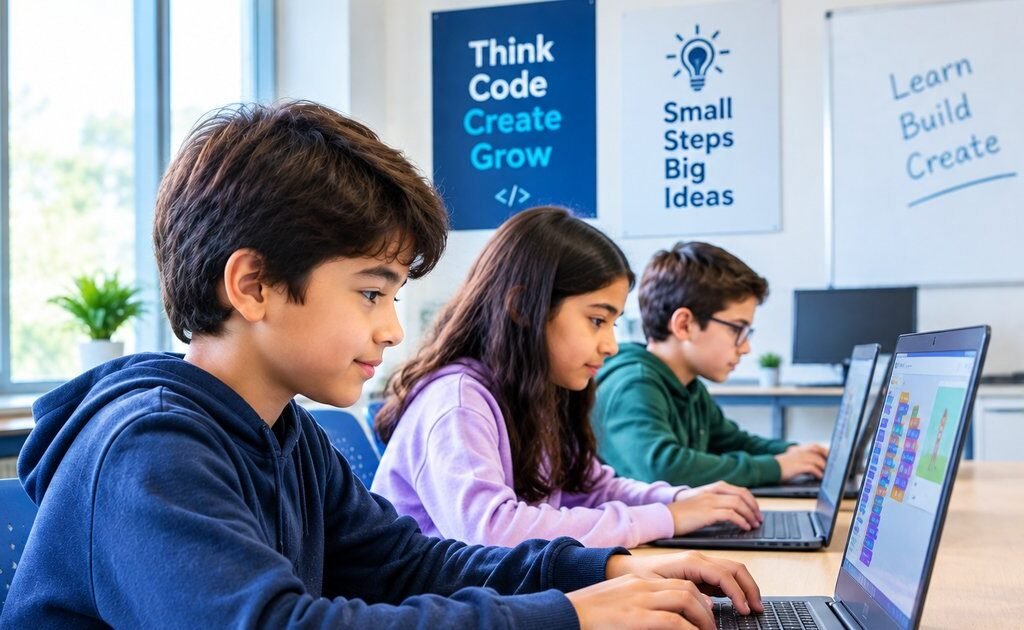
Coding for Kids: A Parent’s Guide to Building Future-Ready Skills
Coding for kids 2026 is becoming an increasingly valuable way for children to explore technology, creativity, and problem-solving.. As technology becomes an important part of everyday life, education, and future careers, learning how technology works can provide children with valuable skills.
Coding is no longer only a skill for future programmers. It can help children develop creativity, logical thinking, problem-solving, and confidence. Through age-appropriate coding activities and engaging learning programs, children can build valuable skills while having fun and exploring their own ideas.
What Skills Can Coding for Kids 2026 Develop?
Coding teaches children how to give instructions, understand patterns, solve problems, and create something from an idea. Instead of simply using technology, children can learn how technology works and how they can use it to create.
The importance of coding skills for kids in 2026 goes beyond learning a programming language. Coding can support important skills that children can use at school, in creative activities, and later in their professional lives.
Coding Builds Problem-Solving Skills
One of the biggest benefits of coding is that it encourages children to solve problems systematically. When a program does not work as expected, children have to identify the problem, think about possible solutions, and try again.
This process helps children understand that mistakes are part of learning. With regular practice, coding can make problem-solving feel like an interesting challenge rather than something to avoid.
Learning to Think Step by Step
Coding requires children to follow instructions in a logical order. They learn that completing one step correctly can help them move toward a larger goal.
This step-by-step approach can also support learning in other subjects. Children become more comfortable breaking complicated tasks into smaller and more manageable steps.
Breaking Big Problems Into Smaller Tasks
A large problem can sometimes feel difficult when viewed as one task. Coding teaches children to divide that problem into smaller parts.
For example, creating a simple digital project may require planning the characters, movements, instructions, and final result separately. Children can then work on each part until the complete project comes together.
Encouraging Logical Thinking
Logical thinking is another important part of coding education for kids 2026. Children learn to recognize patterns, understand cause and effect, and make decisions based on specific instructions.
These abilities can support children as they approach challenges in mathematics, science, technology, and everyday situations.
Building Confidence Through Practice
Learning something new does not always happen immediately. Coding gives children opportunities to experiment, make changes, and improve their projects.
When children see their own ideas become working digital projects, they can develop a greater sense of achievement and confidence in their ability to learn.
Coding Encourages Creativity
Coding is not only about logic. It can also be a creative activity where children turn their imagination into digital projects.
Children can create stories, animations, games, interactive activities, and other projects depending on their age and learning level. This combination of creativity and technology makes coding an engaging way to develop future-ready skills for kids 2026.
What Skills Can Coding for Kids 2026 Develop?
The benefits of coding extend beyond computers. Well-designed coding classes for kids in 2026 can help children develop a combination of technical, creative, and personal skills.
Critical Thinking and Logic
Coding encourages children to ask questions, examine problems, identify patterns, and make logical decisions. These skills can help them approach unfamiliar challenges with greater confidence.
Creativity and Innovation
Children can use coding to experiment with their own ideas. They can decide what they want to create and explore different ways of achieving their desired result.
This makes coding a useful activity for encouraging imagination and innovation alongside technical learning.
Problem-Solving and Decision-Making
Coding projects often involve challenges that require children to make decisions. They may need to determine what went wrong, select a different approach, and test the result.
Parents exploring coding for kids 2026 should consider their child’s age, interests, and learning level. Repeated practice can help children become more comfortable with challenges and develop a positive attitude toward problem-solving.
Communication and Collaboration
Many coding projects can be completed as group activities. Children can share ideas, discuss solutions, divide tasks, and work toward a common goal.
These experiences can strengthen communication and teamwork, which are among the essential skills for kids in 2026.
When Should Kids Start Learning Coding?
There is no single age that is right for every child. The best starting point depends on the child’s age, interests, attention span, and learning level.
The key is to make coding education for kids 2026 age-appropriate, interactive, and enjoyable rather than treating it like an advanced academic subject.
Coding for Younger Children
Younger children can begin with simple activities that introduce basic concepts such as sequencing, patterns, instructions, and cause and effect.
Visual coding tools and games can make these concepts easier to understand because children can learn through interaction rather than complicated text-based programming.
Coding for School-Age Children
Older children can gradually explore more advanced concepts and work on larger projects. Depending on their level, they may learn programming fundamentals, create interactive projects, or explore different areas of technology.
The goal should be steady skill development rather than rushing children into advanced programming.
How Coding Classes Help Children Learn
Structured learning can make it easier for children to develop coding skills consistently. The best coding classes for kids 2026 should focus on practical learning, age-appropriate activities, and opportunities for children to experiment.
Learning Through Projects and Activities
Children often learn effectively when they can apply what they have learned. Instead of only reading about coding concepts, project-based activities allow them to use those concepts in practical situations.
Projects can also make learning more enjoyable because children can see the results of their work.
Turning Ideas Into Digital Projects
One of the exciting parts of coding is seeing an idea become something interactive. Children can start with a simple concept and gradually develop it into a digital project.
This approach connects creativity with technology and supports the development of coding and digital skills for kids 2026.
How to Choose the Right Coding Program for Your Child
Parents have many options when looking for coding programs. Choosing the right program involves considering how the classes are designed and whether they match the child’s age and learning needs.
Age-Appropriate Learning
A good program should introduce concepts at a level children can understand. Younger learners may benefit from visual and activity-based learning, while older children can gradually explore more advanced coding concepts.
Practical and Engaging Activities
Look for programs that give children opportunities to create, experiment, and solve problems. Practical activities can make technology easier to understand and keep children engaged during learning.
Supportive Learning Environment
Children learn best when they feel comfortable asking questions and making mistakes. A supportive environment can encourage curiosity and help children develop confidence as they learn new concepts.
How Threex Academy Helps Kids Develop Future-Ready Skills
Threex Academy focuses on helping children explore learning through technology, creativity, and innovation. Its programs can provide children with opportunities to develop skills that are increasingly valuable in a digital world.
Coding and Digital Learning
Through coding and technology-focused activities, children can begin developing digital skills for kids in 2026 in an engaging and age-appropriate environment.
The focus is not simply on teaching children how to code but on helping them understand how technology can be used to create, explore, solve problems, and develop new ideas.
Developing Skills Beyond Coding
Coding can be one part of a broader learning experience. By combining technology with creativity, problem-solving, and collaboration, children can develop skills that support their learning both inside and outside the classroom.
Final Thoughts on Coding for Kids in 2026
Coding can give children more than technical knowledge. It can provide opportunities to develop logical thinking, creativity, problem-solving, communication, and confidence. With the right approach, coding for kids 2026 can help children develop valuable digital and problem-solving skills.
For parents, the goal should not necessarily be to make every child a programmer. Instead, coding can be introduced as an engaging way for children to understand technology, explore ideas, and develop future-ready skills for kids 2026.
With age-appropriate activities, practical projects, and a supportive learning environment, children can gradually build digital skills while enjoying the process of learning and creating. Digital learning can provide children with opportunities to develop technology skills alongside other forms of learning. Parents can also explore guidance from UNICEF on digital learning and children.