
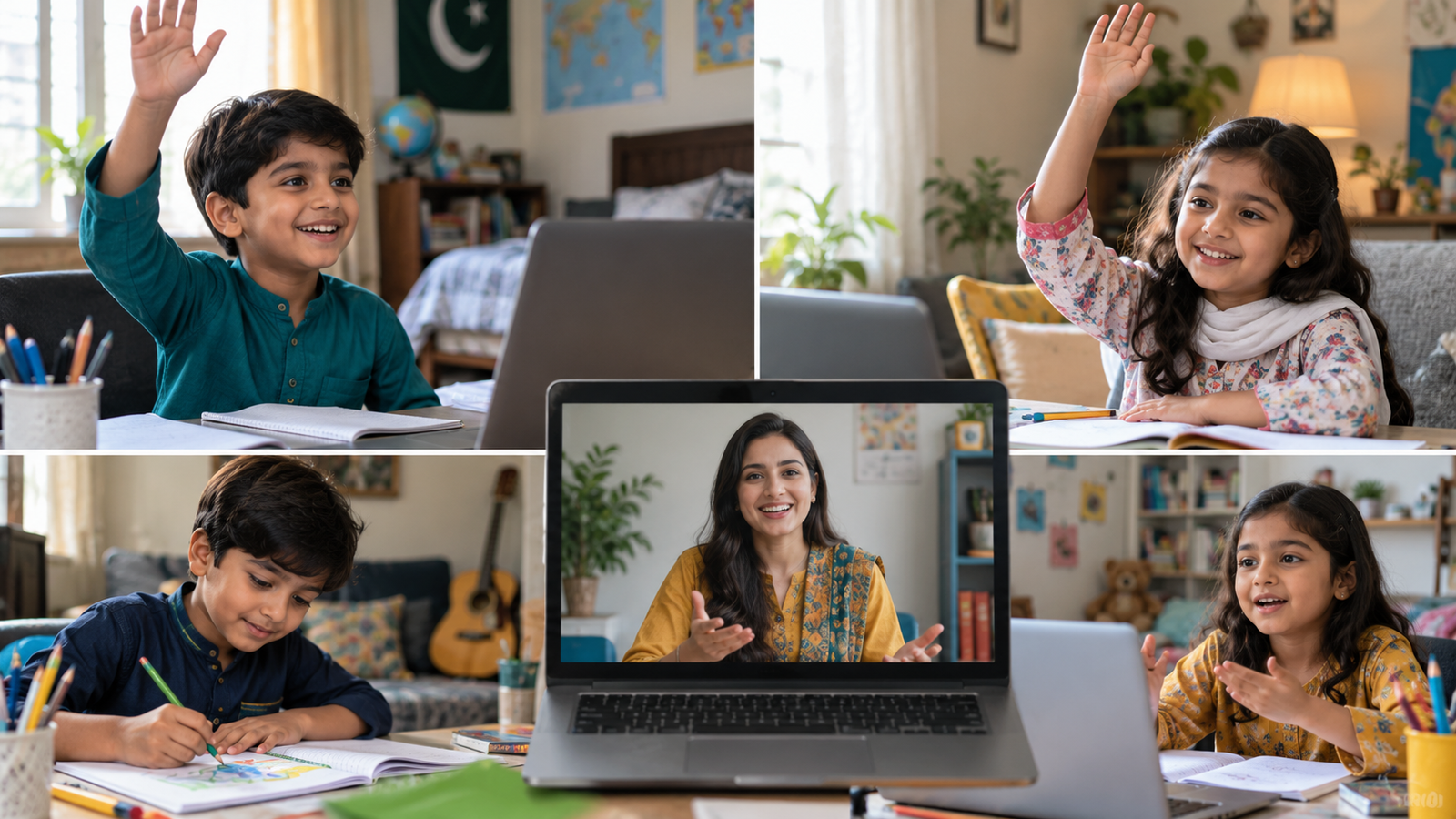
Virtual school in Pakistan can provide families with a structured learning routine when travel, weather or other disruptions make the regular school day unpredictable. A virtual school can offer live teaching and structure at home, provided it is designed around the child rather than a screen full of worksheets.
For many families, the right online learning approach should include teacher interaction, manageable live sessions, time away from the device and appropriate support from parents or caregivers.
What Should You Expect From a Virtual School in Pakistan?
Ask for a sample timetable. Primary pupils need a clear start, manageable live sessions, time to move, reading and hands-on tasks away from the device. Younger children need even more play and adult support. A good class gives each child chances to answer, ask questions and practise; it is more than watching a recorded lecture.
How to Choose the Right Virtual School in Pakistan
Choosing a virtual school in Pakistan requires more than checking the timetable or course list. Parents should look at how teachers communicate with children, how lessons are delivered and how progress is monitored over time. A smaller live class may give children more opportunities to participate, ask questions and receive feedback.
It is also worth asking how the school handles different learning needs. Younger children may need more guidance from an adult at home, while older pupils may be able to complete more tasks independently. Families should also understand the expected daily routine, technology requirements and what happens if a child misses a live lesson.
Before enrolling, ask the provider to explain the curriculum, class format, assessment process and parent communication. Taking time to understand these details can help families choose a learning arrangement that fits their child’s age, needs and home routine.
Five questions to ask before enrolling
- Who teaches the class? Ask about the teacher’s qualifications, experience and the number of children in each live session.
- What is taught? Request the grade-specific subject outline, books, learning goals and assessment approach. If you need a particular examination or certificate, ask how it is provided before paying.
- How will you hear about progress? Look for examples of teacher feedback and a regular parent update.
- What happens when connectivity fails? Ask how work is shared and how a missed class can be recovered.
- How much parent support is expected? A three-year-old and an older primary pupil have very different needs.
Keeping learning going during disruptions
UNICEF Pakistan has documented how flood risks can interrupt children’s access to school and how preparation, learning materials and temporary learning spaces help protect continuity. This does not mean every family should switch permanently to online school. It does show the value of a practical backup plan: keep a reading habit, a small set of offline activities, and a clear way to contact your child’s teacher.
At home, try a simple rhythm: a short teacher check-in, reading together, a maths game using household objects, movement, then independent drawing or writing. If conditions are unsafe, follow local official guidance first; learning can resume when the family is safe.
For families considering a virtual school in Pakistan, having a clear learning routine can make it easier to continue education when regular school attendance is disrupted.
How Threex Academy can help
Choosing a virtual school in Pakistan means looking at more than just online lessons. Parents should also consider teacher support, curriculum, class format, communication and the child’s individual learning needs.
We offer teacher-led virtual school, homeschooling support and one-to-one lessons. We begin by asking about your child’s age, level and goals, then explain the available timetable and learning plan. Contact us to request the current curriculum outline, class format and fees.
Further reading: UNICEF Pakistan, “Learning Through It All” (March 2026).