
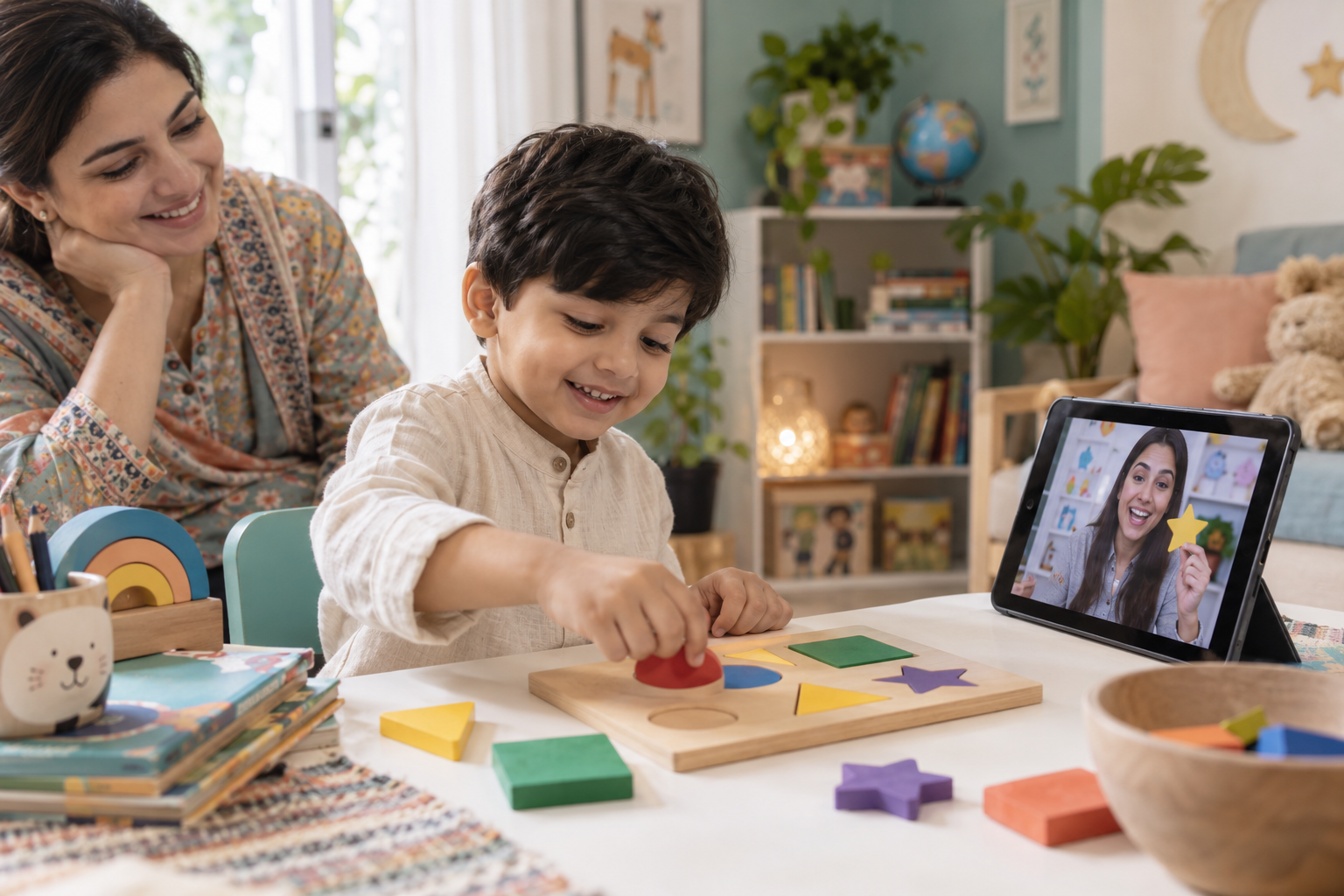
Can a three-year-old learn online? Yes, with the right expectations: short human interaction, a familiar adult nearby, and much more time playing and exploring away from the screen. A preschool program should never be a full day of passive video watching.
Start with the child, not the device
At age three, children learn through movement, conversation, stories, songs and handling real objects. A live teacher can introduce a sound, a counting game or a story, then invite the child to try it with a parent or caregiver. The best online session becomes a prompt for offline play.
The World Health Organization’s guidance for children aged three to four recommends limiting sedentary screen time to no more than one hour a day, with less being better, while making room for active play and sleep. Families should consider the child’s total daily screen use when choosing a class schedule.
What to ask a preschool provider
- How long are live sessions, and what happens between them?
- Will my child talk to the teacher and other children?
- What household materials or books will we need?
- How does the teacher adapt if my child is shy or restless?
- How much support does a parent need to give?
- Will progress be described through real observations, rather than grades alone?
A gentle sample rhythm
Begin with a greeting and song; spend a brief live period on a story, letter sound or number idea; step away from the device for a movement game; then use blocks, crayons or household objects to practise. Close with reading together. The exact timing should suit your child and the teacher’s plan.
How Threex Academy approaches early years
Our virtual-school pathway is intended to include playgroup and preschool foundations from age three. We discuss readiness, language and family routine before suggesting a class. Ask for current availability, the session length and a sample timetable; contact our team to decide if this is a good fit.
Further reading: WHO guidance on physical activity, sleep and screen time for children under five.