
Introduction:
Education is changing quickly, and online schooling in 2026 is becoming more than simply watching lessons on a screen. Today, virtual study can include live classes, interactive activities, digital resources, teacher feedback, personalized learning and carefully selected technology.
For parents exploring online schooling in 2026, understanding these changes can help them choose a learning environment that fits their child’s needs.
Why Online Schooling in 2026 Is Growing?
Online schooling is a form of education where students learn through digital platforms instead of attending a traditional physical classroom every day. Depending on the school, children may attend live virtual classes, complete independent activities, communicate with teachers and submit assignments online.
A well-designed virtual school should still provide structure, curriculum-based learning and regular teacher support. Technology is the delivery method, but teaching remains at the centre of the experience.
Why Virtual Study Is Growing in 2026
Virtual study continues to develop as technology becomes more integrated into education. In Pakistan, efforts to strengthen distance learning are also receiving attention. In 2026, Cambridge reported working with Pakistan’s Ministry of Federal Education and Professional Training on national standards and an assessment framework intended to make distance learning more consistent and trusted. (Cambridge University Press)
This reflects a broader shift toward flexible learning options that can support children who cannot always access a traditional school environment.
AI Is Becoming Part of Digital Learning
One of the biggest online schooling trends in 2026 is the growing discussion around artificial intelligence. AI can potentially support teachers and students with personalized learning experiences, feedback and educational activities.
However, technology should not replace genuine learning. The OECD’s 2026 Digital Education Outlook emphasizes that AI can support learning when it is used with clear educational goals and teacher guidance. (OECD)
For children, this means AI should be used carefully and appropriately rather than simply providing ready-made answers.
Personalized Learning Is Becoming More Important
Every child learns differently. Some children need additional practice, while others may be ready to move ahead more quickly.
Modern online schooling can make it easier for teachers to provide different resources and activities according to individual learning needs. Digital platforms can also help teachers monitor assignments and identify areas where students may need additional support.
This can make virtual study more flexible while maintaining educational structure.
Live Classes Still Matter
Although online education uses technology, children still need meaningful interaction with teachers and classmates.
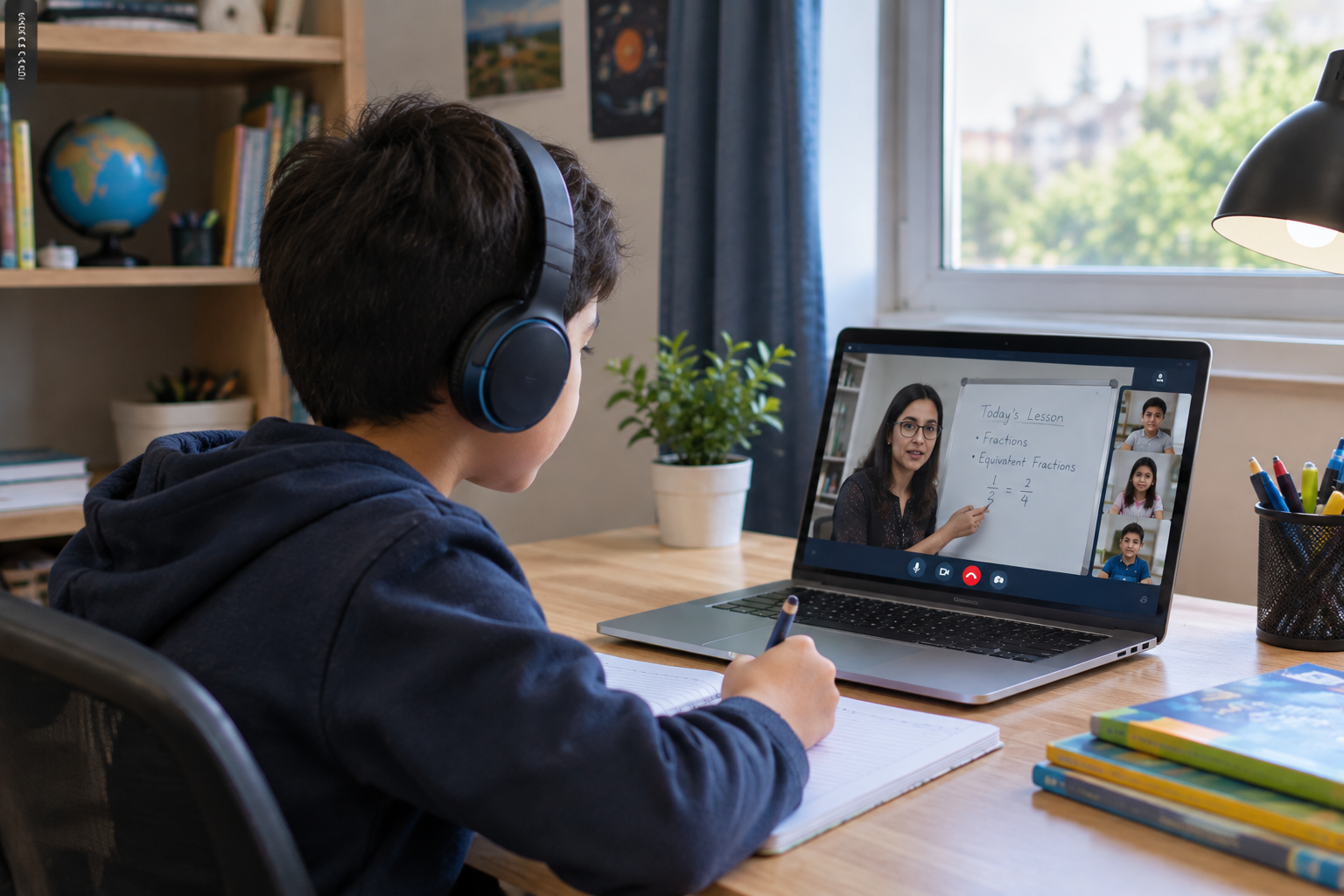
Live virtual classes allow students to ask questions, participate in discussions and receive explanations in real time. Teacher interaction can also help children stay engaged and understand that online schooling is not simply independent screen time.
A strong virtual learning environment therefore combines digital resources with real teacher involvement.
Digital Skills Are Becoming Essential
Children are growing up in a world where digital tools are increasingly part of education and everyday life. Learning through an online school can help students become comfortable with responsible technology use.
In 2026, AI literacy is also becoming an important educational topic. The OECD and European Commission have highlighted the need for students to understand AI, evaluate its outputs critically and use it responsibly. (OECD)
These skills can complement traditional abilities such as reading, writing, creativity and problem-solving.
Parents Still Have an Important Role
Successful virtual study does not mean parents have to become teachers. However, younger children often benefit from having a consistent study space, predictable routine and appropriate support at home.
Parents can help by checking schedules, encouraging regular breaks and communicating with teachers when their child needs additional help.
The goal is to create a balanced environment where children can learn independently while still having the support they need.
What Should Parents Look for in 2026?
When choosing an online school, parents should look beyond the technology. Consider the curriculum, teacher qualifications, class size, live interaction, assessment methods, communication with parents and technical support.
It is also worth asking how the school approaches AI, digital safety and student engagement. The OECD’s latest research emphasizes that digital education should remain human-centred and protect learners’ privacy, safety and learning needs. (OECD). As online schooling in 2026 continues to evolve, families have more options for flexible and technology-supported education.
The Future of Online Schooling
Online schooling in 2026 is evolving from simple digital lessons toward more interactive, flexible and personalized learning experiences. Virtual study can give families additional educational options while technology continues to develop.
The most valuable approach is not necessarily using the most technology. It is using technology purposefully, with qualified teachers, meaningful interaction and a clear focus on children’s learning.
For parents exploring education options in 2026, understanding these changes can make it easier to choose a virtual school that supports both academic development and responsible digital learning.